


Developing accurate and reliable Computer Vision projects is a complex task. Clients typically come with unique ideas accompanied by specific business characteristics such as domain, scale, and business processes. Because of this, such projects often have a research-oriented nature — at the outset, it may be unclear whether the task is feasible.
When faced with the challenges of implementing data-driven projects, organizations need a practical Computer Vision framework. It should always deliver a tangible outcome: a complete digital solution, a core project feature, or even a well-grounded conclusion to conserve resources and discontinue the project if necessary. To address these needs, a specialized methodology for managing Computer Vision projects the business DIET approach was developed.
What is DIET, and why it’s not about nutrition?
Several approaches were analyzed to minimize the risks of data projects (for example, CRISP-DM, Microsoft TDSP, KDD), but they turned out to be mostly general instructions without detailed processes, examples, or practical insights. Based on this, a proprietary Computer Vision framework called DIET was developed, combining real project experience with common industry standards. It provided a comprehensive description of every project stage and the expected outcomes. Within the team, the phrase “to go on a DIET” became synonymous with a careful and resource-efficient approach to both clients and reputation.
This approach to Computer Vision development helped define and resolve key uncertainties even at the consulting stage, ensuring that no problems remained unresolved by the time a solution was implemented. It also made it possible to effectively monitor project progress and gain valuable insights at each stage through a structured, research-driven process.
Let’s go further and transcript it.
D — Discovery
At the first stage, it is important to clarify business goals and requirements. This step helps determine whether Computer Vision is applicable to the idea and identify potential challenges commonly faced in data-driven projects.
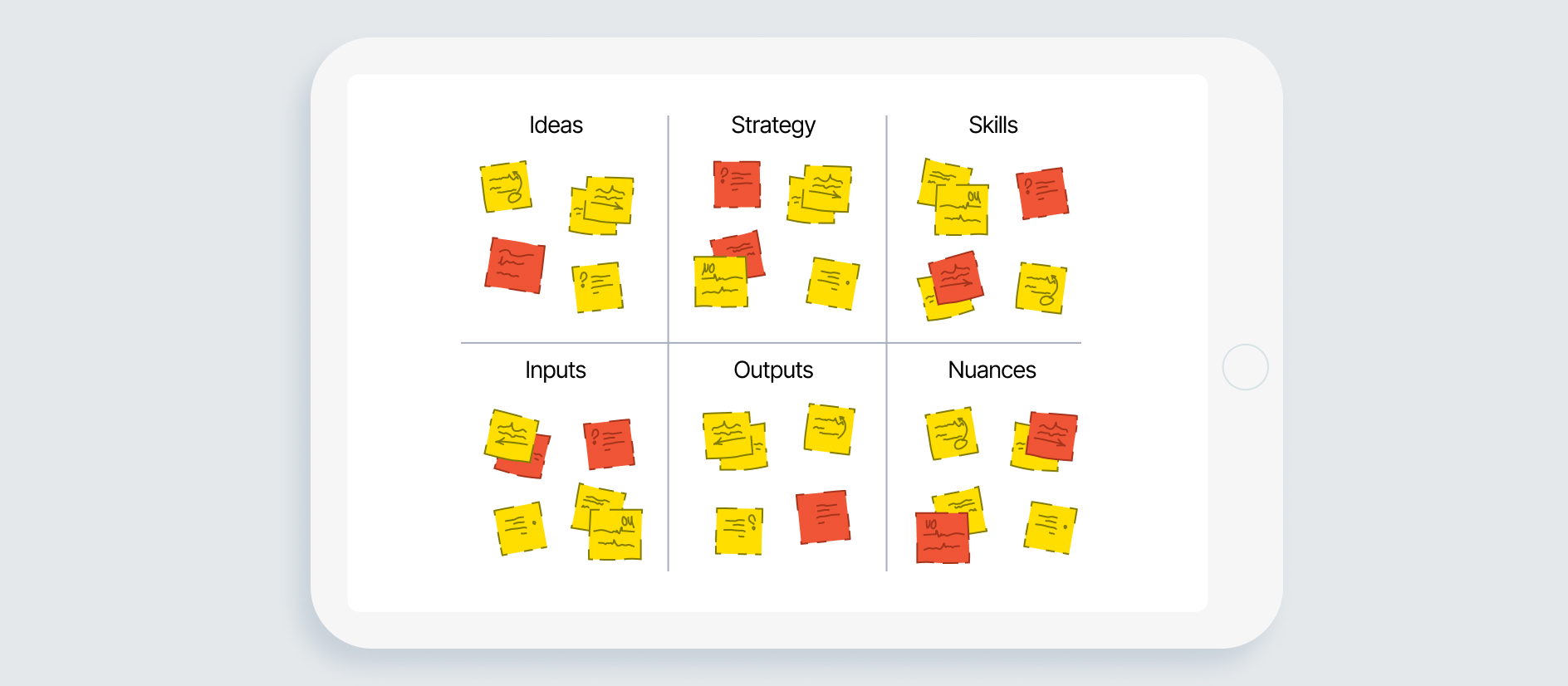
From the outset, the business should understand how a Computer Vision solution may affect resource investment and profitability. Establishing a clear correlation between costs, AI accuracy, and expected economic impact enables informed decision-making. As an outcome, a comprehensive dashboard should be created, visualizing all collected information, including metrics, milestones, ideas, strategy, potential risks, and a ballpark estimation.
I — Ideation
Based on the project idea, data engineers and researchers should collect the necessary tools for implementation, including frameworks, scientific research, and existing solutions. The primary focus at this stage is to identify methods for addressing the most complex aspects of the project. Public datasets can be used to build an initial prototype and validate feasibility.
E — Experiment
Unlike the Ideation stage, the Experiment stage involves conducting a series of rigorous tests using project-specific data to identify where models and algorithms perform best and where they fall short, followed by iterative improvement. Working directly with the actual dataset is a crucial part of this process, as it allows for a deeper understanding of the specific challenge and helps overcome the project’s key technical difficulties.
At this stage, a core prototype should be developed based on the research findings to demonstrate both the feasibility of the AI solution and the potential profitability of the overall concept.
T — Transformation
Once the feasibility and efficiency of the solution are confirmed, the integration process into the existing infrastructure should begin. This stage includes bringing performance metrics into production, performing standard back-end and front-end development, deploying the solution within the target environment, and implementing iterative enhancements.
The result is a fully implemented digital solution that operates with sufficient accuracy to generate measurable business value and deliver a significant return on investment.
To go on DIET, or to DIE — how does it work?
As an example of Computer Vision Development through all DIET stages, we were engaged in a project with computer vision technology detecting signs of “drowsiness.” The client was a construction company. They turned to us with the problem: crane operators fall into a slumber, and it caused losses of building materials and accidents with builders. So, our task was to detect operators’ drowsiness and warn them about possible incidents.
Among the identified difficulties was the absence of an internet connection at an altitude. So, we needed to bring Jetson Nano mini-computers because the architecture depended on that. In the Ideation stage, we searched for available instruments; found videos with sleepy people, and defined that we could measure yawns, the distance between the eyes, and their position — the visual signs of drowsiness. It wasn’t a client’s data yet, but we have already shown that the challenge can be solved thanks to AI.

When the client was satisfied with the first results, we requested a video with a real crane operator — that means we brought the client’s data and applied instruments to it. Working with the client’s video was very important because it changes all project progress: the video could be blurred, night-shooted, and other difficulties could break the project. So, after our research and prototypes based on public and client data, the client understood the solution would be helpful: fewer building materials would be lost, and he would avoid accidents or even threats to life on the construction site.
If talking about resources saving, we had a client who wanted to measure the height of trucks and signal them to avoid crashing into railway bridges. We’ve done the research and found out we’ll be helpful only for scaling this idea. For the height measurement of one bridge, it was enough to put laser sensors, so a client decided to begin from it. The project was stopped, and a client spent his resources on essential for that moment things.